How to Attract Frogs and Toads to a Garden Pond: A Beginner's Guide
How to Attract Frogs and Toads to a Garden Pond: A Beginner's Guide
A pond without frogs always feels half-finished. The good news is that frogs and toads are among the easiest wild animals to attract: give them still water, damp cover and a garden that isn't scrubbed clean, and they will usually find you on their own. A weekend of digging and planting is often all it takes.
This guide covers the parts that matter — the shape of the pond, what to plant in and around it, and the small details that decide whether frogs visit once or settle in for good. Toads have their own preferences, so they get a mention too.
What Frogs and Toads Actually Need
Both species spend far more time out of the water than in it. The pond is a nursery and a summer refuge; for the rest of the year they are hunting slugs, beetles, flies and spiders in damp borders, log piles and long grass. Get the surrounding garden right and the water becomes the simple part.
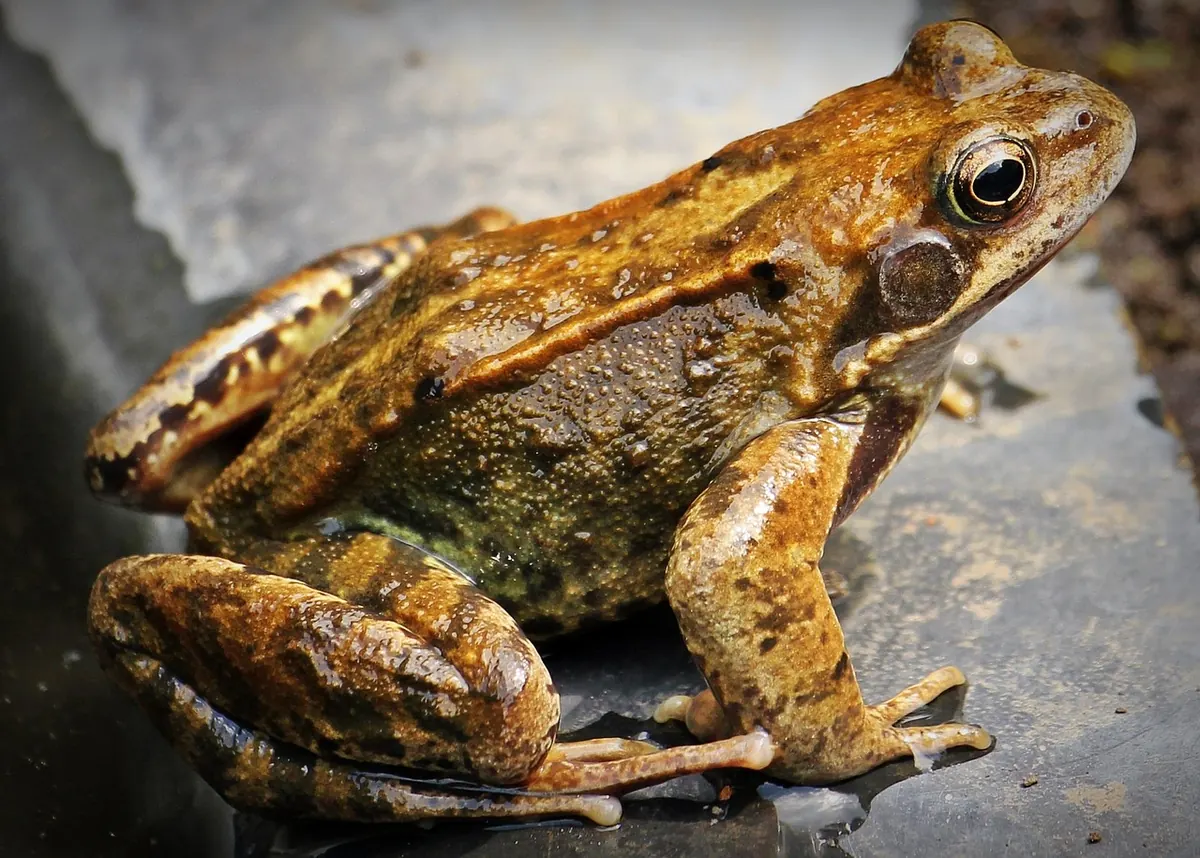
Common frogs have smooth, damp skin, travel by jumping and rarely stray far from moisture. Common toads have dry, warty skin, walk or make short hops, and prefer drier, more sheltered spots — a gap beneath a wall, a stack of logs, deep leaf litter. Toads are also loyal to the pond they were born in, which is why a brand new pond can fill with frogs long before a single toad turns up.
Broadly, an amphibian-friendly garden offers:
- Still water with no fish in it
- Shallow, sun-warmed edges where spawn can be laid
- Easy ways in and out of the water
- Damp shade, log piles and long grass within a few metres of the pond
- Plenty of invertebrates, which means going easy on the tidying and the chemicals
Be patient about where they come from. If there is no pond, ditch, allotment or wetland within a reasonable distance, frogs will not appear by magic. Moving spawn or adults between ponds is best avoided: it spreads ranavirus and chytrid fungus, and it rarely ends well for the animals you are trying to help.
Fish are the other big exclusion. Goldfish, koi and even tiny sticklebacks will eat frogspawn and tadpoles, and they muddy the water so that submerged plants struggle. If you already have a fish pond, frogs may still visit the planted margins, but successful breeding is unlikely. A separate, fish-free wildlife pond is a far better investment than trying to retrofit a fish pond.
Designing the Pond: Shape, Depth and Easy Exits
Wildlife ponds are deliberately untidy. Straight sides, a raised lip and a steep drop are the hallmarks of a pond built for looking at rather than for living in.
Aim for something roughly 60–80cm deep in the middle, so the water stays cool in summer and doesn't freeze solid in a hard winter, with at least one gently sloping side. A shallow "beach" of 5–10cm of water over a gradual slope gives frogs, toads and hedgehogs a way out; without it, animals can tire and drown. An uneven, curvy outline also creates more shallow edge — the bit amphibians use most.
Size matters less than people think. A pond a metre and a half across will do the job; so will a large sunken tub or half-barrel if it is planted and left to mature. What matters is that the water is still, the edges are varied, and there are no vertical plastic walls trapping animals in. If you use a rigid liner, build a pebble ramp or a piece of rough wood from the water to the bank. If you use a flexible liner, fold it to create shallow shelves and hide the edge with stones, turf or marginal plants.
Position the pond where it gets sun for part of the day but not all day. Frogs need warmth to develop, yet a pond that bakes in full sun will overheat and grow algae. Dappled shade from a nearby shrub is ideal. Avoid siting it directly under a tree that drops heavy leaf litter, as too much rotting vegetation will starve the water of oxygen. A few fallen leaves are fine; a thick blanket is not.
Planting In and Around the Pond
Plants do more than make the pond look natural. They oxygenate the water, soak up nutrients that would otherwise feed algae, and give tadpoles somewhere to hide. They also create the damp, insect-rich cover that adult frogs and toads need when they leave the water.
Use native plants wherever possible, and avoid invasive species such as duckweed in small ponds, floating pennywort or water fern. Good choices include:
- Submerged oxygenators: hornwort, water crowfoot and spiked water-milfoil.
- Marginal plants: marsh marigold, water forget-me-not, lesser spearwort, ragged robin and water mint.
- Bog and bank plants: lady's smock, meadowsweet, purple loosestrife and soft rush.
Plant in baskets or directly into a shallow shelf, but leave some open water and bare mud. A pond that is completely filled with vegetation can become too shaded and low in oxygen, and frogs need clear water for spawn. Around the edge, let the grass grow longer, pile a few stones or logs, and leave a patch of leaf litter in a shady corner. These small refuges are where frogs will spend most of their lives.
Think of the pond as the centre of a wider habitat, not a standalone feature. A frog needs a place to breed, a place to hunt, and a safe place to hide — often within a few metres of one another.
Keeping Frogs and Toads Safe and Healthy
The fastest way to lose amphibians is to treat the garden like a laboratory. Slug pellets, insecticides, weedkillers and lawn treatments can all kill frogs, toads and the invertebrates they eat. Even if the label says it is safe for wildlife, it is safer to avoid it altogether. Hand-pick slugs, encourage birds and hedgehogs, and accept a few nibbled leaves.
Other practical precautions make a real difference:
- Provide at least one easy exit from the pond, and check it regularly in summer when water levels drop.
- Never move frogspawn or adult amphibians between ponds. If you want more ponds, create them and let nature colonise.
- Keep cats indoors at dawn and dusk, or fit a bell, if you notice them hunting around the pond.
- Leave a wild corner with long grass, nettles, log piles and leaf litter for hibernation.
- In winter, do not smash ice on the pond. Trapped frogs can be injured by the shock waves. Melt a hole instead by resting a hot pan on the surface.
Water quality matters too. Rainwater is best for filling and topping up. Tap water contains chlorine and chloramine, which can harm amphibians; if you must use it, let it stand for a few days or use a dechlorinator. Avoid fertilizers and runoff from compost heaps, and don't introduce fish, ducks or non-native turtles. A simple, still, plant-rich pond with plenty of cover will stay healthy with very little intervention.
Finally, be patient. A new pond may be visited by frogs within weeks, especially if there are other ponds nearby. Toads may take a year or more. Leave the garden a little messy, keep the water clean, and the chances are that one warm, damp evening you will hear the first croak — and know the pond has finally become a home.
Photo: NoName_13 / Pixabay
Raised Bed vs Container Gardening: Which Is Better for UK Patios?
Raised beds and containers both work on a UK patio, but they differ in cost, watering, yield and space....
Plants for a Pollinator-Friendly Balcony in Shade: A Comparison
A practical comparison of shade-tolerant pollinator plants for UK balconies, covering pot sizes, watering...
About Us