What to Sow in March in the UK: A Seasonal Vegetable and Flower Checklist
March is the month when the growing year properly gets going, but it is also the month that keeps gardeners humble. One weekend you are sowing in shirtsleeves, the next you are covering trays with fleece because a sharp frost has appeared in the forecast. The trick is not to hold back until everything feels safe, because you will lose weeks, but to match each crop to the conditions it can actually tolerate. Some seeds want warmth and a windowsill. Others are perfectly happy in cold, wet ground. Knowing the difference is what makes March productive rather than disappointing.
Read the month before you read the seed packets
Seed packets give averages. Your garden gives you the truth. A sheltered plot in Cornwall and an exposed allotment in Northumberland can be three or four weeks apart in temperature, and the soil in a raised bed warms faster than heavy clay at the bottom of a slope.
Before sowing anything outdoors, check two things. First, the soil: if it sticks to your boots in claggy lumps and holds together when squeezed, it is still too cold and wet. Wait. Second, the forecast: a single night at minus two can undo a fortnight of growth. If you do not already know your last expected frost date, ask a neighbouring gardener or check a local weather record rather than guessing.
Cold frames, cloches, fleece and even a doubled-up layer of horticultural fleece buy you roughly the equivalent of a couple of weeks of milder conditions. That is often enough to make the difference between a slow, sulking crop and a quick, healthy one.
Start indoors or under cover
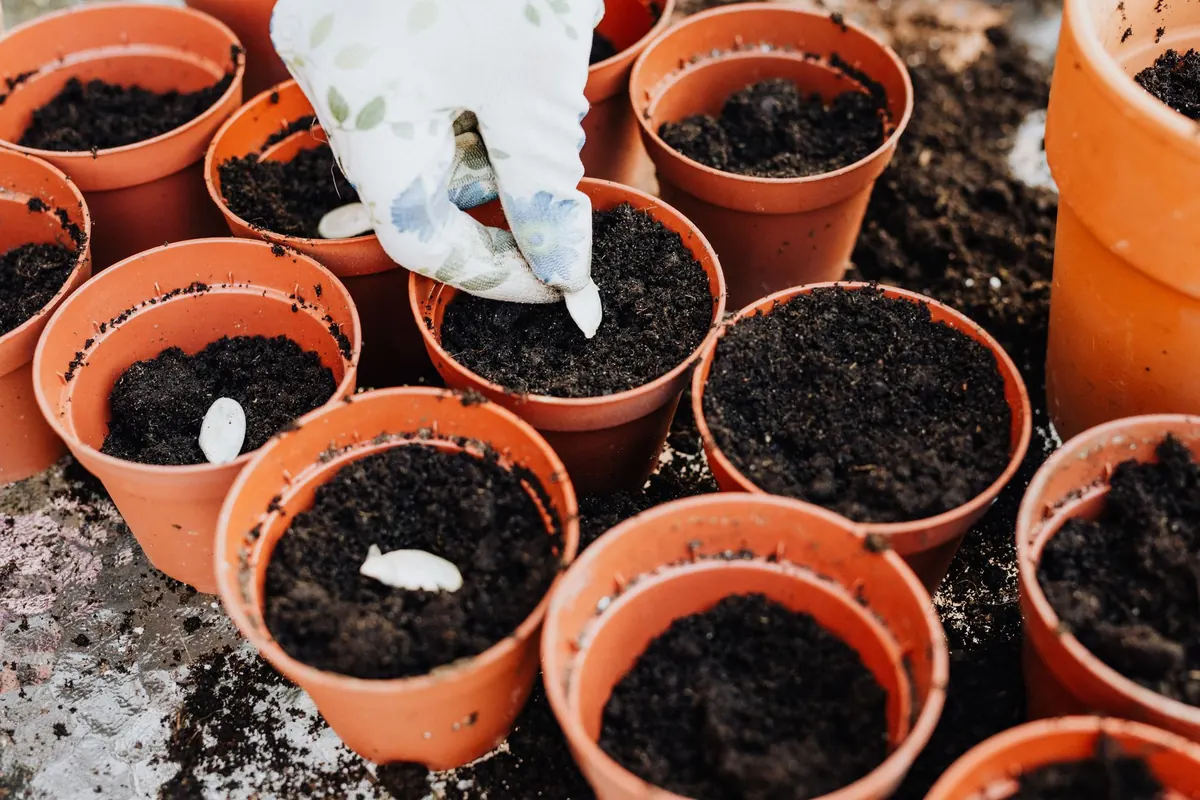
These are the seeds that benefit from warmth and a longer season. A heated propagator is useful but not essential; a bright windowsill above a radiator will do for most of them, as long as seedlings get enough light once they germinate. Leggy, pale seedlings are almost always caused by too little light, not too little heat.
- Tomatoes – sow late March for a good balance between size and light levels. Sow thinly, prick out into individual pots once the first true leaves appear.
- Peppers and chillies – slow to germinate and slow to grow. If you have not started them yet, sow now and keep them warm.
- Aubergines – same logic as peppers, and they resent cold roots, so avoid a chilly windowsill.
- Brassicas – summer and autumn cabbages, calabrese, kale and Brussels sprouts. A cool but frost-free spot suits them better than a hot windowsill.
- Leeks – sow in a deep tray or pot and let them grow on before planting out in early summer.
- Celery and celeriac – notoriously fiddly. Surface-sow, keep moist, and do not let them dry out for a single day.
- Bedding flowers – sweet peas, cosmos, nicotiana, lobelia and antirrhinum all appreciate an early start.
- Hardy herbs – parsley, coriander, chives and basil if you can give basil real warmth.
Label everything. It sounds trivial until you are staring at four identical trays of green seedlings in May and cannot remember which is kale and which is calabrese. Water from below where you can, and ventilate the propagator lid once seedlings are up to reduce damping off.
Direct sowing outdoors
Outdoor sowing in March is a gamble, but a calculated one. Choose hardy crops, sow into soil that has been covered for a week or two with black polythene or fleece to take the chill off, and be ready to cover the rows if a cold snap is forecast.
Good candidates for direct sowing now include:
- Broad beans – an early sowing gives you pods before the blackfly arrive in force. Sow 5cm deep, 20cm apart.
- Peas – round-seeded varieties cope better with cold, wet soil than wrinkle-seeded ones. Protect the seedlings from pigeons, which will strip them overnight.
- Spinach – quick, hardy and useful for cut-and-come-again leaves.
- Radish – fast enough to give you a crop in a month or so, though they can turn woody in sudden heat.
- Salad leaves – rocket, mizuna, mustard and winter lettuces. Sow small patches every fortnight rather than one big row.
- Carrots and parsnips – only if the soil is workable and has warmed. Stone-free ground matters for straight roots.
- Onion and shallot sets – plant into firm, settled soil and push them in so just the tip shows.
- Hardy annuals – cornflower, calendula, poppies and nigella can be sown where they are to flower.
What to hold back
Leave courgettes, cucumbers, sweetcorn, French and runner beans, and outdoor tomatoes until later. Sowing them now in cold ground does not give you a head start; it gives you rotting seeds, damping off and a rescue operation in April. The same goes for basil outdoors and for tender flowers such as zinnias and sunflowers, which prefer to be sown under cover or waited on.
Frost protection that actually works
Fleece is the workhorse of March. Lay it directly over newly sown rows, weighting the edges with soil or bricks so it does not blow away, and remove it during the day once the weather settles so light and air reach the plants. Horticultural fleece generally protects against a few degrees of frost; it is not a substitute for a heated greenhouse.
Cloches, whether glass, plastic or homemade from a cut-down bottle, are ideal for individual plants. A cold frame is better still for hardening off seedlings before they go outside. The process matters: move trays into the frame for a few hours a day, then longer, then overnight, over the course of a week to ten days. Rushing it produces scorched leaves and stalled growth.
Water in the morning rather than the evening when frost is likely. Damp foliage overnight in freezing conditions is asking for trouble. And remember that a clear, still night is far more likely to bring frost than a cloudy one, so check the forecast before you assume you are safe.
Jobs that make the sowing easier
- Cover bare soil with polythene, cardboard or fleece to warm and dry it before you sow.
- Fork over beds you plan to use, but do not dig wet clay. You will make worse clods than you started with.
- Set up supports for peas, broad beans and sweet peas now, while the plants are small and the ground is soft.
- Clean and sharpen tools, and check that greenhouse glass and frame joints are sound.
- Sow in small batches rather than one big hit, so a late frost or a slug attack cannot wipe out everything.
- Keep a note of what you sow and when. Next year's plan will be better for it.
Making March work for you
Treat the month as a series of small bets rather than one big commitment. Start the tender crops indoors, sow the hardy ones outside where the soil allows, and keep fleece within reach. If something fails, resow. March is forgiving in that way: there is still plenty of season left, and a fortnight's delay rarely matters by the time summer arrives. Sow a little, sow often, and let the weather have the final say.
Raised Bed vs Container Gardening: Which Is Better for UK Patios?
Raised beds and containers both work on a UK patio, but they differ in cost, watering, yield and space....

Plants for a Pollinator-Friendly Balcony in Shade: A Comparison
A practical comparison of shade-tolerant pollinator plants for UK balconies, covering pot sizes, watering...
About Us