Raised Bed vs Container Gardening: Which Is Better for UK Patios?
Raised Bed vs Container Gardening: Which Is Better for UK Patios?
Most British patios are not generous. A few square metres of paving, a fence, and sun that turns up somewhere between eleven and three. Even so, you can grow a surprising amount of food in a space like that. The deciding factor is rarely the size of the patio, but whether you fill it with a raised bed or a row of containers.
Both work. Both will give you a bowl of salad and more herbs than you can use. But they behave very differently once you’re standing there with a watering can in July, and the difference shows up in your costs, your back and your harvest.
Space: What Each Option Actually Takes Up
A raised bed claims a footprint and keeps it. The practical size for a patio is 1.2m wide by whatever length fits, at 25–30cm deep for salads, beans and most roots, or 45cm if you want carrots and parsnips or an edge you can sit on. Go wider than 1.2m and you can’t reach the middle from both sides; run it along a fence and you only need access from the front, so a 60–90cm depth is often more sensible. That bed is permanent. You cannot shuffle it when you want to sit out, and it will likely need a membrane or a base to stop weeds and protect the paving.
Containers are modular. A row of pots, troughs and grow bags can be rearranged in minutes. They can be moved to catch the sun, shifted out of the way for a barbecue, or stacked on a shelf when the patio needs to be a patio. The trade-off is that every pot has its own root space, its own water supply and its own little microclimate. Ten small pots are not the same as one raised bed, even if the total surface area is similar.
Cost: What You Pay Up Front and Later
Raised beds usually cost more at the start. Timber, screws, liner, and enough compost to fill a bed 1.2m x 2.4m x 30cm deep—roughly 0.85 cubic metres—can easily run to £80–£150 or more, depending on whether you use new tanalised timber, reclaimed boards or a metal kit. Containers can start cheap: a few buckets, recycled mushroom trays, or budget grow bags. But quality pots are not cheap, and a large terracotta or glazed pot can cost as much as a small raised bed.
The ongoing costs differ too. A raised bed holds a large volume of compost, so it dries out more slowly and needs less frequent replacement. Containers need fresh compost more often because nutrients leach out with every watering. You can refresh pots with a slow-release fertiliser and a mulch, but after two or three years many patio containers benefit from a full compost change.
- Raised bed: higher initial outlay, lower long-term compost use per plant.
- Containers: lower entry cost, higher ongoing cost for compost and feed.
- Hybrid: one raised bed for hungry crops, a few pots for herbs and salads.
Watering and Maintenance: The July Test
This is where the two options separate. A raised bed is essentially a large block of soil. In summer it may need watering every day or two, but it has a reserve. If you miss a day, plants sulk but often recover. A container is a small block of soil. On a hot, breezy patio, a 10-litre pot can dry out in a single afternoon, and a grow bag can go from damp to bone dry before you get home from work.
That difference matters most for tomatoes, courgettes, beans and anything in flower. Irregular watering causes blossom end rot in tomatoes, split roots in carrots, and tough, bolted salad. A raised bed buffers those mistakes. Containers punish them.
If you can only water once a day, a raised bed is far more forgiving than a row of small pots.
You can close the gap with mulch, self-watering containers, drip lines or a simple timer. But those add cost and complexity. If your patio is in full sun and you are out for long days, containers demand more discipline.
What Grows Best in Each
Raised Beds
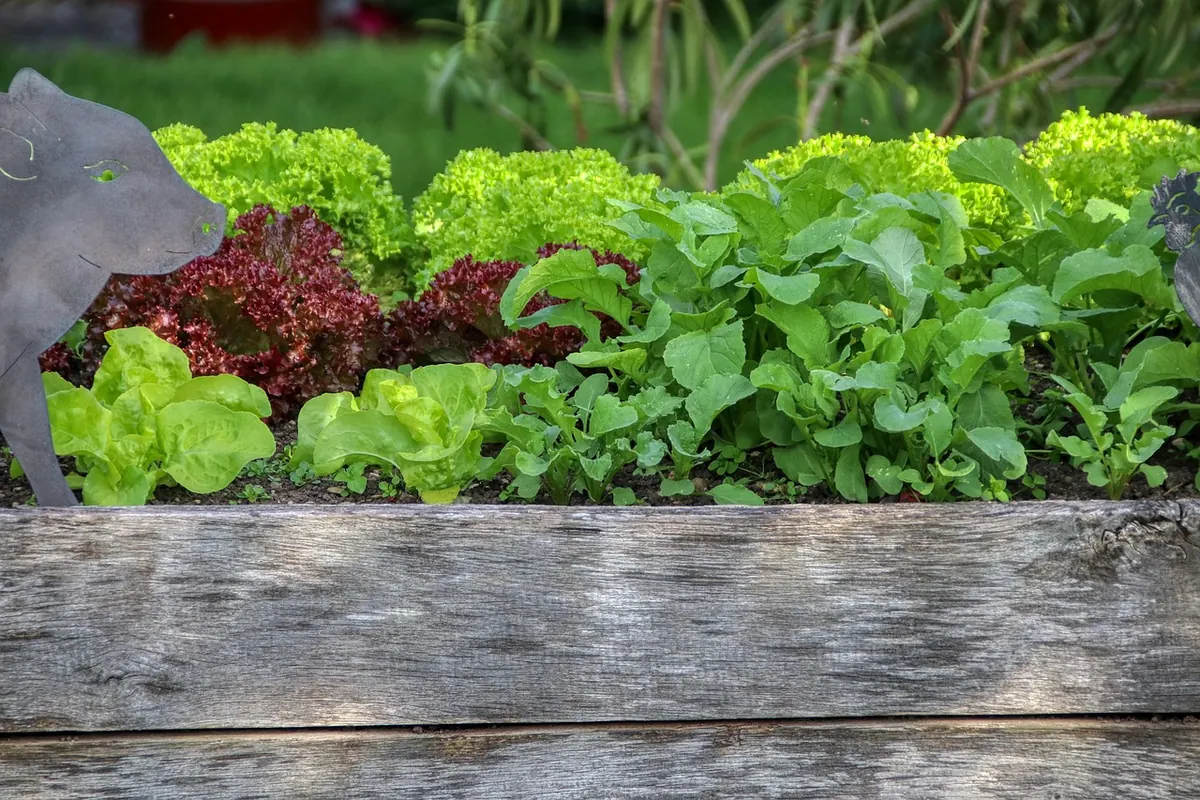
Raised beds suit crops that want root room and a consistent supply of moisture. Carrots, parsnips, beetroot, chard, kale, dwarf beans, climbing beans, courgettes, cucumbers and even potatoes can all do well if the depth and spacing are right. You can also plant in blocks rather than rows, which uses patio space more efficiently. A 1.2m x 2.4m bed can hold a surprising amount: a row of climbing beans at the back, salads in the middle, and herbs along the front.
Containers
Containers are brilliant for herbs, salad leaves, radishes, spring onions, chillies, cherry tomatoes, strawberries and dwarf French beans. They are also the easiest way to grow on a balcony or a rented patio where you cannot fix anything to the ground. Use the biggest pot you can afford and fit. A 30–40cm diameter pot holds one tomato or one courgette plant; a trough holds a cut-and-come-again salad row. Grow bags work, but they dry out fast and are best used with a tray or self-watering insert.
Microclimate, Wind and Pests
Patios are often warmer than the open garden. Brick, stone and paving soak up heat during the day and release it at night, which can help tender crops like chillies and aubergines. But they also create wind tunnels. A raised bed is heavy and stable, so plants move less and roots stay put. Light containers can blow over, especially tall tomatoes in a gale. If your patio is exposed, choose squat pots, weight them with stones, or group them together for shelter.
Pests behave differently too. Slugs and snails love the damp edges of a raised bed, especially if it sits against a fence. Vine weevil is a particular problem in containers, where the grubs eat roots and the adults notch the leaves of strawberries and fuchsias. Compost in pots can also dry out unevenly, creating safe harbour for ants or root aphids. Inspect pots when you water, and use nematodes or barriers where needed.
Mobility and Access
A raised bed can be built to a height that suits you. A 60–70cm tall bed means far less bending, and a 90cm bed can be worked from a stool or wheelchair. That is a real advantage if your back or knees complain. The cost is more timber and more compost. Containers can also be raised on blocks, benches or wheeled trolleys, but tall pots become unstable and heavy to move. If you struggle with bending, a few large pots on a sturdy bench may be easier than a low bed.
Which Should You Choose?
If you have a permanent patio, want the biggest harvest for the least daily fuss, and can afford the compost, build a raised bed. It will give you more resilience, more root space and a better buffer against hot weekends. If you rent, move pots around, or want to start small, containers are the smarter first step. They let you learn what your patio’s sun and wind actually do before you commit to a bed.
For most UK patios, the best answer is a hybrid: one raised bed for the thirsty, hungry crops, and a collection of containers for herbs, salad and anything you want to move. That way you get the buffer of a bed and the flexibility of pots. The real test is not which looks tidier, but which one you will still be watering in August. Choose the option that fits your routine, your budget and your back, and you will grow far more than you expected from a few square metres of paving.
Photo: planet_fox / Pixabay
Plants for a Pollinator-Friendly Balcony in Shade: A Comparison
A practical comparison of shade-tolerant pollinator plants for UK balconies, covering pot sizes, watering...

How to Choose Local UK Honey at a Farmers' Market: An Explainer
How to tell genuine local UK honey from repackaged blends: what a label should say, which questions to ask...
About Us