Raw vs Pasteurised Honey: What's the Difference for UK Buyers?
A jar of honey that says "raw" on the label is not automatically better than one that doesn't. It is often different, though — in flavour, in texture, and in how it behaves a few weeks after you open it. In the UK, "raw" has no fixed legal meaning, so the only way to choose well is to understand what the processing actually does.
The short version: raw honey is strained and rarely heated much; pasteurised honey is heated and finely filtered so it stays clear, runny and near-identical from batch to batch. Both are perfectly good honey. They are built for different jobs.
What "raw" means on a UK jar
Raw honey is usually honey that has come out of the comb and been strained — nothing more. Most small-scale UK beekeepers work this way. They uncap the frames, spin or press the honey out, let it settle, run it through a coarse sieve to catch wax and stray bee parts, and jar it.
But raw is a spectrum rather than a category. Honey straight from the extractor is thick and reluctant to move, especially in a cold utility room in October. To get it into jars at all, plenty of producers warm it gently — around 35–40°C, roughly hive temperature — so that it flows. Most would still call that raw. Another beekeeper might insist that any warming at all disqualifies it. Neither is wrong, because there is no rule to appeal to.
Filtering varies just as much. Some raw honey is passed through a coarse strainer that leaves visible flecks of wax or pollen. Some is settled and poured off carefully, so it looks almost as clean as a supermarket jar. The difference is usually cosmetic, but it matters if you are trying to trace a honey back to a particular hive or field.
What pasteurisation does
Commercial honey is typically heated to somewhere in the region of 65–70°C, held there briefly, then cooled quickly and passed through fine filters. The aims are practical:
- to kill the wild yeasts that can make honey ferment in the jar
- to dissolve existing sugar crystals so the honey stays clear
- to strip out pollen grains, wax fragments and air bubbles
- to give blenders a consistent base that behaves the same way in every batch
The trade-off is flavour. Heat drives off some of the volatile compounds that carry floral aroma, so pasteurised honey tends to smell and taste flatter and more generically sweet. Some heat-sensitive components are reduced, and the colour often darkens a little. What you gain is predictability: a jar that pours in January, dissolves quickly and looks the same in a sachet, a catering tub or a supermarket bottle.
It is worth separating pasteurisation from "commercially sterile." Pasteurised honey is not sterile, and it can still crystallise eventually. The process simply slows that down and gives manufacturers a more controllable product. Nor does heating make honey unsafe to eat; it is already a remarkably stable food. The point is that heat changes character, not that it turns honey into something fake.
Taste, texture and crystallisation
This is where the difference shows up on your toast.
- Aroma. Raw honey usually smells of something specific — heather, lime, borage, ivy, oilseed rape. Pasteurised honey mostly smells sweet.
- Flavour. Raw honey has more layers, sometimes a herbal, slightly sharp or malty finish. Blended supermarket honey is designed to taste the same every time, which is a skill in itself, but it isn't the same experience.
- Texture. Raw honey often begins to crystallise within weeks or months. Pasteurised honey can stay runny for a year or more.
- Crystallisation. A sign of glucose content, not spoilage. Oilseed rape honey sets firm within days; heather honey is thixotropic — a jelly that liquefies when you stir it. Neither is faulty.
If you want a honey that drizzles cleanly over yoghurt or dissolves instantly in tea, pasteurised or finely filtered honey has the advantage. If you want a honey that tastes like the place it came from, raw is usually the more interesting choice. Crystallisation is not a defect to be tolerated; for many buyers, it is part of the texture and proof that the honey has not been over-processed.
Reading the label without being taken in
Words such as "raw", "unfiltered", "natural" and "pure" are marketing terms rather than defined categories in UK honey labelling. What a label must tell you is more useful: that the product is honey, the country or countries of origin, the best-before date, the net weight, and the name and address of the packer or seller. Blended honey has to declare that it is a blend, though it may not tell you much beyond that.
If you want a genuinely raw jar, look for:
- a named beekeeper, farm or apiary
- a harvest year or season
- a specific flower or place — "Lincolnshire oilseed rape, 2024" tells you far more than "flower honey"
- someone you can ask. At a farmers' market, try: "Was this heated, and how finely was it filtered?" Producers who care answer without hesitating.
Also check the origin statement. A jar labelled "a blend of EU and non-EU honeys" may be perfectly pleasant, but it is unlikely to have the character of a single-source UK honey. Conversely, "produce of England" or a named county does not automatically mean raw; it simply tells you where the honey came from.
Does raw honey have health benefits?
Raw honey is often sold with claims about enzymes, antioxidants and pollen. It does contain small amounts of these things, and honey has been used as a soothing food for sore throats for generations. But it is still sugar — mostly glucose and fructose — and no jar of honey is a substitute for a balanced diet or medical treatment.
The evidence for local honey helping hay fever is weak and mixed. If you enjoy it and it feels soothing, that is a good enough reason to choose it. But be sceptical of labels that imply raw honey can cure allergies, boost immunity or replace medication. In the UK, health claims on food are tightly regulated, yet vague wellness language can still slip through on small-batch packaging.
Raw honey is a food, not a medicine. Treat any health claim with the same caution you would apply to a supplement.
One safety point applies to both types: honey should not be given to infants under 12 months old, because of the risk of infant botulism. That advice stands whether the honey is raw or pasteurised.
How to store honey and rescue a crystallised jar
Honey keeps best in a clean, dry jar with a tight lid, in a cupboard rather than the fridge. Refrigeration encourages crystallisation and can make the honey harder to use. A dark spot at room temperature is ideal. If your honey does set, you can bring it back to a runny state without ruining it:
- Place the jar in a bowl of warm water — around 40°C, not boiling.
- Leave it for 15–20 minutes, stirring occasionally, until the crystals dissolve.
- Repeat if needed, but avoid direct heat or a microwave, which can overheat parts of the honey and flatten the flavour.
If you prefer the set texture, simply use it as it is. Soft-set honey spreads beautifully on toast, and firm honey can be spooned into porridge or used in baking. There is no need to throw away honey that has crystallised; it has not gone off.
Which one should you buy?
- Buy raw if you want the flavour of a specific place, flower or harvest, you enjoy a thicker or set texture, and you don't mind stirring or warming the jar. It is also the better choice if you like buying directly from beekeepers and want to support small-scale UK production.
- Buy pasteurised if you need honey that stays clear and runny, dissolves quickly in drinks, or has to perform consistently in baking, catering or a busy household. It is the practical choice for everyday use where appearance and predictability matter more than aroma.
- Buy both if you use a lot of honey. Keep a pasteurised or finely filtered jar for tea, marinades and baking, and a raw jar for toast, cheese boards, yoghurt and anywhere you want the honey to taste like itself.
The best jar is the one that suits how you actually eat honey. Raw and pasteurised are not rivals so much as two different products with the same name. Once you know what each one does well, the label stops being a puzzle and becomes a useful clue.
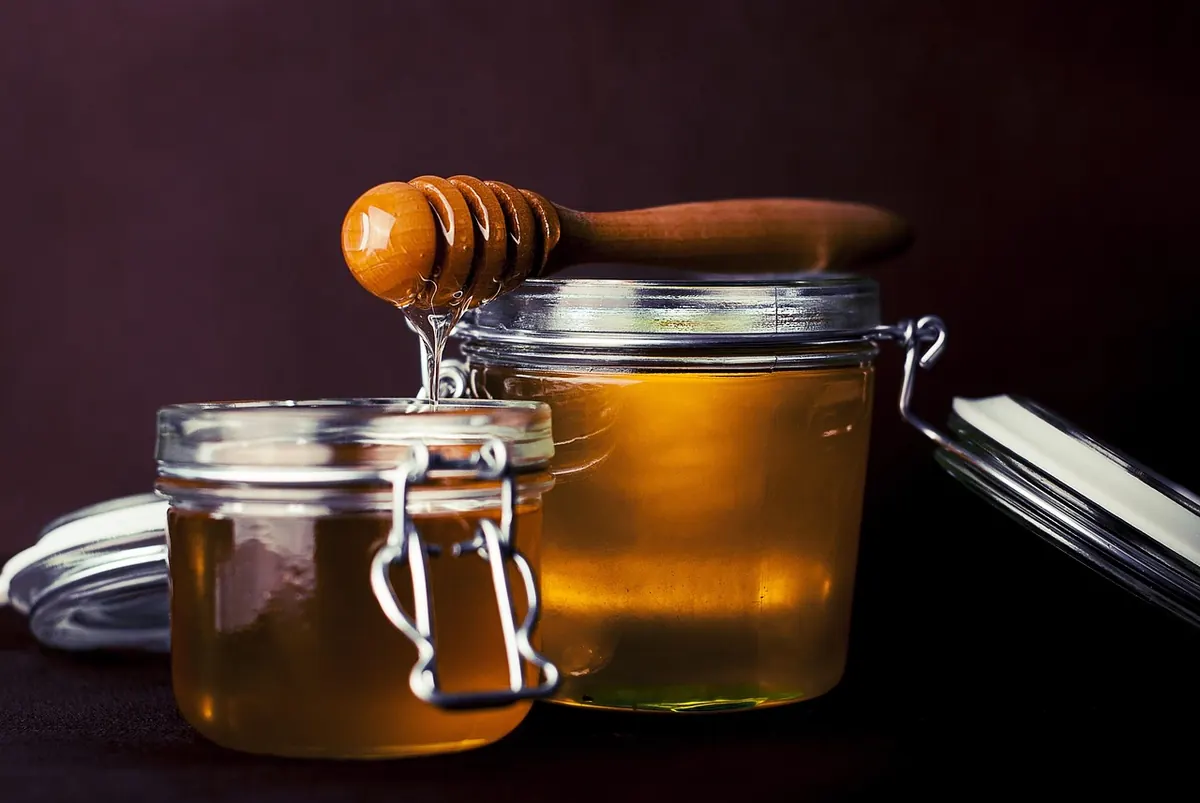
Photo: fancycrave1 / Pixabay
Raised Bed vs Container Gardening: Which Is Better for UK Patios?
Raised beds and containers both work on a UK patio, but they differ in cost, watering, yield and space....

Plants for a Pollinator-Friendly Balcony in Shade: A Comparison
A practical comparison of shade-tolerant pollinator plants for UK balconies, covering pot sizes, watering...
About Us